
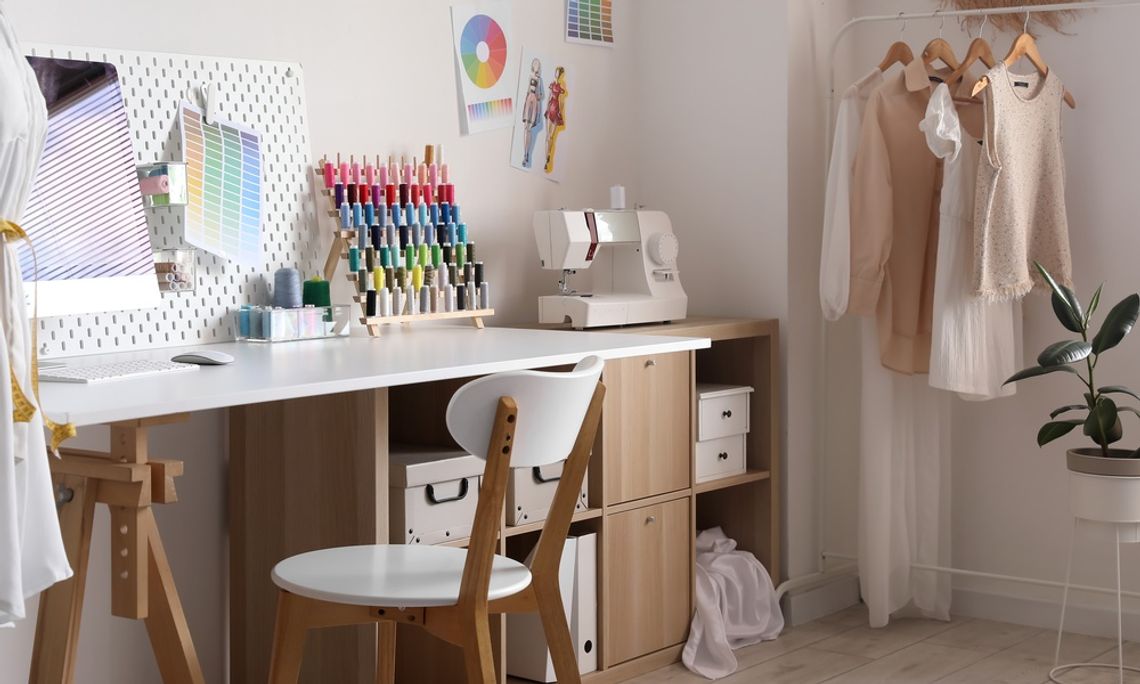
A passion for sewing often involves many hours dedicated to creative projects and detailed work. While the focus remains on the fabric and thread, the environment where you sew holds significant importance for your health and comfort.
An uncomfortable or poorly arranged workspace can lead to physical strain, fatigue, and a decrease in your overall enjoyment of the craft. Setting up a healthy workspace for long sewing sessions is a fundamental aspect of a sustainable and pleasant hobby.
The Right Chair for Proper Support
Your choice of a chair directly affects your posture and comfort during any sewing project. You need an adjustable chair with adequate lumbar support to maintain a healthy spinal curve. Your feet should rest flat on the floor, and your knees should form a right angle.
A quality chair prevents back pain and promotes better circulation throughout your lower body. This selection allows you to concentrate on your work, not on shifting to find a comfortable position.
Strategic Lighting to Reduce Eye Strain
Proper illumination is essential to see your work clearly and avoid mistakes or eye fatigue. You should combine general room light with a dedicated task light directed at the needle area. This combination eliminates shadows and helps you see fine details on your fabric and stitches.
Natural light from a window is an excellent source, but you must position your workspace to avoid glare. A flexible lamp lets you adjust the light's direction and intensity for different tasks.
Optimal Table Height and Space
An ergonomic setup requires a table at the correct elevation to prevent shoulder and neck strain. The table surface should allow your arms to rest comfortably with a slight bend at the elbow. Sufficient space around your machine provides room for fabric manipulation and easy access to tools.
Learning how to find the perfect height for sewing tables and chairs will ensure you maintain a neutral and comfortable posture. A large, clear surface area also reduces clutter and promotes a more efficient workflow.
Organization for an Efficient Workflow
A tidy space is one of the most important factors when setting up a healthy workspace for long sewing sessions because it helps you work more effectively. Use drawers, pegboards, and containers to organize your notions, threads, and other sewing supplies.
Keep your most used tools, like scissors and seam rippers, within immediate reach. This simple habit reduces unnecessary movements and maintains your focus on the project at hand.
Remember to Take Regular Breaks
Even with a perfect setup, your body needs to move and change positions periodically. These short pauses help to prevent muscle stiffness and mental fatigue, which keeps you fresh.
Use these breaks to rest your eyes, get a drink of water, or do simple stretches. This practice improves your endurance for long sessions and supports your long-term physical well-being.
A healthy sewing workspace is an investment in your craft and your health. Attention to your chair, table, lighting, and organization makes a substantial difference in your comfort and productivity. A well-considered environment allows you to immerse yourself fully in your creative pursuits for hours without negative physical consequences.
Comment
Comments