
By Tommie Hart
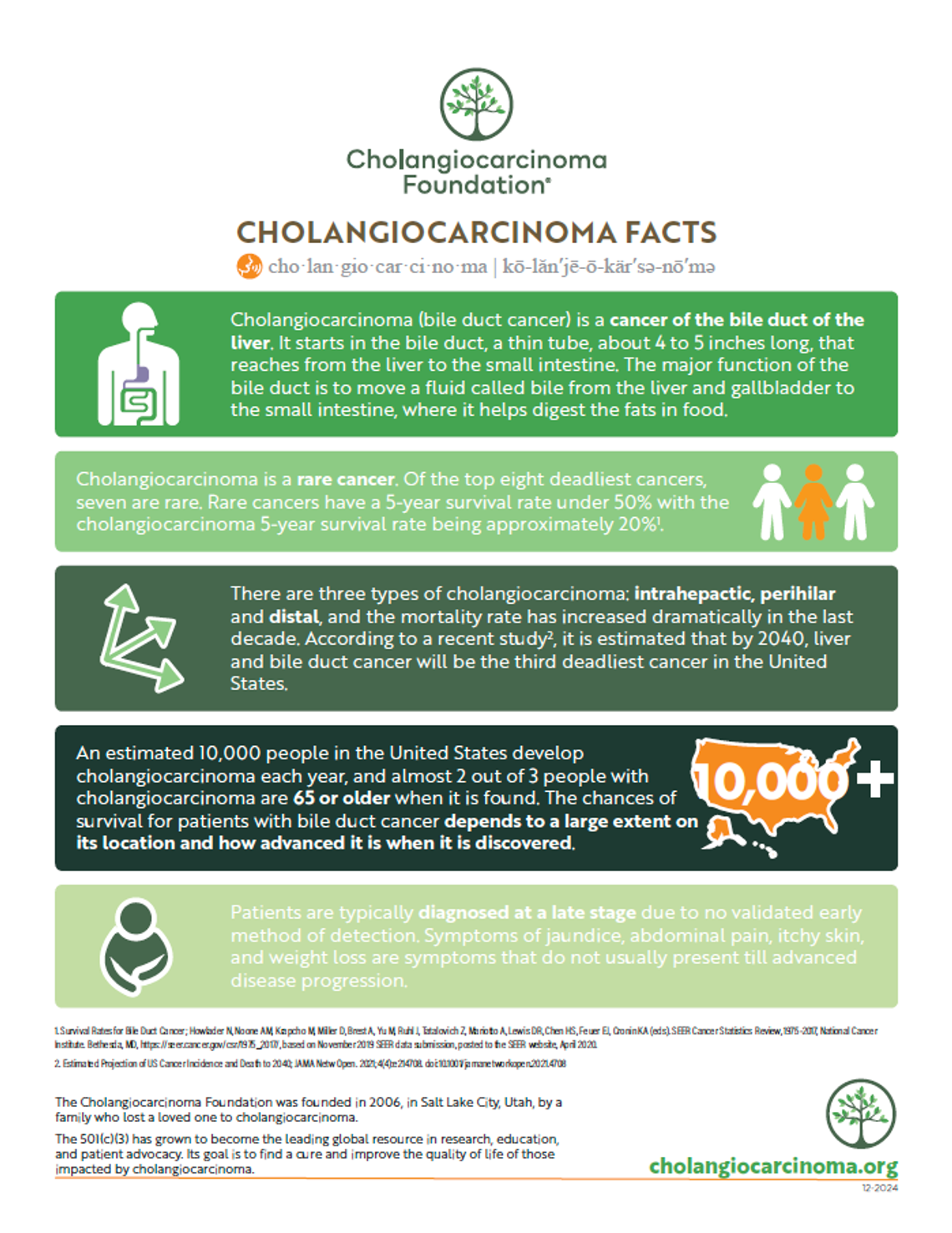
Cholangiocarcinoma, or bile duct cancer, is one of the most challenging and under-recognized cancers, with limited treatment options and a grim prognosis for many patients. Despite its rarity, the need for awareness and focused research is immense, as early detection and innovative therapies can make a life-saving difference. With February being Cholangiocarcinoma Awareness Month, it is an opportune time to learn about this disease that affects too many lives.
I am writing as someone who is personally impacted by cholangiocarcinoma. In August 2025, my husband, Rev. Mike Hart, and I were informed of a mass in his liver. We must give credit to Dr. Art Kergosien at Brookhaven Internal Medicine. He noticed that my husband’s liver enzymes were a little elevated and sent him for an ultrasound. As aggressive as this cancer is, early detection is essential.
At that time, we had no idea just how complicated and difficult his fight would become. He had his biopsy at the start of September and that is when we learned that he had cholangiocarcinoma. It was a difficult thing to accept since he was in good health with no symptoms.
Cancer treatment in Mississippi seems to move extremely slow. He was in the middle of October, still not having started treatments, when the symptoms began. His bilirubin started to rise. They could not start his chemotherapy with the elevated bilirubin, so he had to have a procedure called an ERCP to place stents into the bile ducts to help them to work correctly. That procedure caused pancreatitis and resulted in a five-day hospital stay. Unfortunately, those stents did not work and caused more problems and his bilirubin rose to 14.9. He had to have the procedure repeated just two weeks later and the stents changed for longer ones. Since then, there have been countless doctor visits, more hospital stays and more procedures. Things change so quickly with this cancer.
Since cancer treatment is limited in Mississippi, we reached out to MD Anderson in Texas and were quickly set up with an oncologist. On our first visit in October with Dr. Xavier, he had blood work, a CT and was admitted to MD Anderson for the stent exchange. Dr. Xavier also started molecular testing on his biopsy sample.
After three months of chemotherapy that he received at Jackson Oncology with Dr. Sheehan and coordinated with MDA, he unfortunately showed progression of the cancer. Because of this, he has developed a dangerous portal vein thrombus and has been referred to an oncology radiologist at MD Anderson. We have met with Dr. Grace Li Smith, and he will undergo Proton Beam Therapy at MD Anderson. Mike also has a fistula that complicates the radiation treatment even further. Once the radiation sessions are completed and the radiologist feels he is ready, Mike will then be able to start on the next form of targeted chemotherapy.
Luckily, the molecular testing showed that my husband has the FGFR2 FUSION mutation. Only 10-20% of patients have this. Because of that mutation, there is a targeted therapy that works as a small-molecule kinase inhibitor, selectively blocking Fibroblast Growth Factor Receptors (FGFR1, FGFR2, and FGFR3) that have genetic alterations (fusions, rearrangements) in certain cancers, like cholangiocarcinoma. By inhibiting these faulty receptors, the medication stops the abnormal signals that drive tumor cell proliferation, migration, and survival, ultimately slowing or stopping cancer growth. He will start this treatment soon after radiation and we, as well as the oncologists, are very optimistic.
Thankfully, my husband has decent health insurance, and he now has an oncologist and general surgeon in Mississippi and an oncologist, gastroenterologist, radiologist, and oncology surgeon in Texas. This is a trying and complicated health issue that we must traverse. Our new normal.
Although this is an extremely dangerous health situation, we hold strong to our faith that God will take care of him. Mike is a resident of Wesson and the pastor of Mallalieu Methodist and New Hebron Methodist churches. They are full of Godly, caring members that have been with us every step of the way.
February 19, 2026, is World Cholangiocarcinoma Day, a global effort to raise awareness of this challenging disease and highlight the need for early detection, better treatments, and increased support for patients and their families.
This year, I would like to encourage anyone reading to join us by wearing green on February 19 in honor of cholangiocarcinoma awareness. The simple act of wearing green sends a powerful message of solidarity to those battling this disease, their families, and the medical professionals striving to find a cure. It would also mean so much to our local community, where awareness can lead to earlier diagnoses and better outcomes for those affected.
Cholangiocarcinoma is often diagnosed too late due to vague symptoms and limited public understanding of the disease, but by helping to educate others and inspire action could save lives.
You can learn more about cholangiocarcinoma and World Cholangiocarcinoma Day by visiting cholangiocarcinoma.org. Together, we can make a difference!
Comment
Comments