
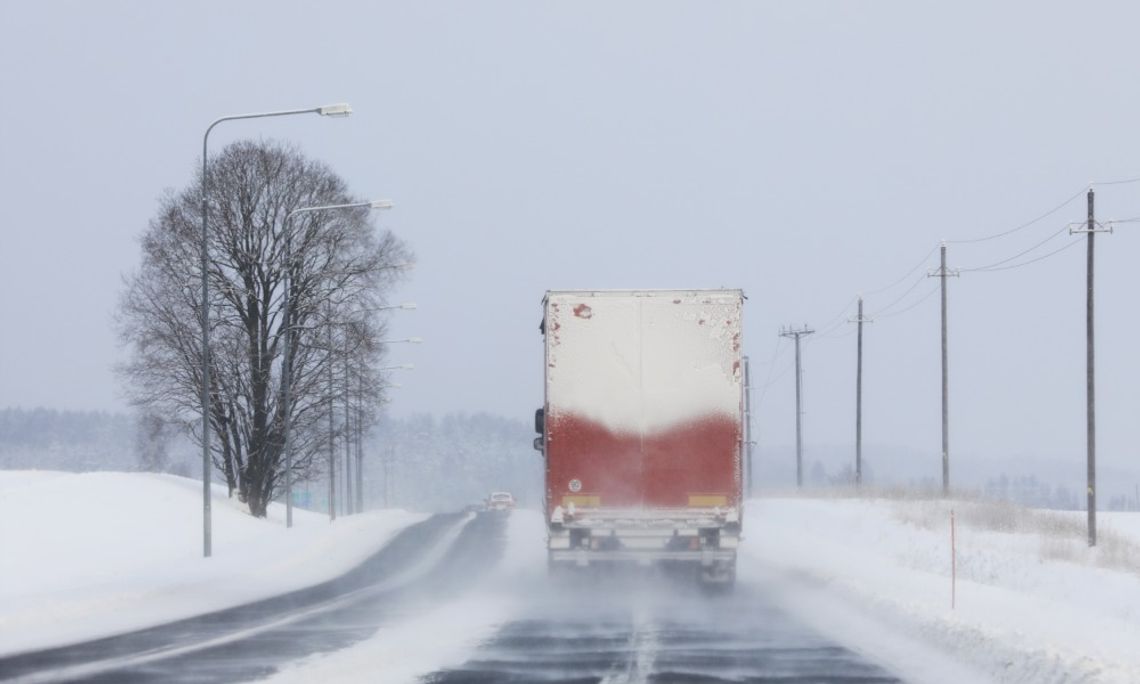
How do truckers deal with snow on the road? They rely on skill, patience, planning, and equipment built for rough winter conditions. Truckers don’t just hope for the best when snow starts falling. They adjust every part of the trip, from speed to spacing to the routes they choose.
They Slow Down Before the Road Gets Slippery
A loaded semi can weigh up to 80,000 pounds, so it already needs a long distance to stop on dry pavement. Snow and ice reduce traction, which increases that stopping distance and makes braking harder to control.
To stay within a safe stopping range, drivers reduce speed early, before the road becomes slick. They use gentle pedal pressure, slow down ahead of turns, and avoid sudden braking.
They Leave Room for the Unexpected
Extra space gives a semi time to slow down without panic braking. That space becomes even more important when other drivers cut in too close or traffic suddenly tightens up.
A truck driver can’t treat snowy roads like dry pavement. The rig needs more distance, more patience, and fewer sudden moves. When the gap stays wide, the driver has a better chance of staying in control if the vehicle ahead stops too quickly.
They Use Parts Built for Winter
Winter driving takes the right setup, not just confident hands on the wheel. In areas that see a lot of snow, many trucking companies will invest in regional-appropriate semi-truck parts for their fleet. One example of this is snow tires. These tires use tread and rubber designed to grip cold pavement better than standard tires. Other regional swaps include stronger batteries that handle freezing temperatures and engine block heaters that keep fluids from thickening overnight.
They Read the Road as Conditions Change
Snow doesn’t always cover the road evenly. One stretch can seem fine, then the next can turn slick due to wind, shade, or freezing pavement.
Experienced truck drivers watch the road surface closely and adjust their speed and positioning based on what they see ahead.
They Know When the Road Wins
Some winter conditions aren’t worth pushing through. Low visibility, severe ice, and closed routes can make the safest choice obvious.
A good driver knows when to get off the road and wait. Delivery schedules are important, but they don’t outweigh safety. Parking until conditions improve protects the driver, the cargo, and everyone sharing the highway.
Winter Driving Comes Down To Control
The answer to how truckers deal with snow on the road comes down to preparation and control. They slow down, leave space, use proper equipment, track the weather, and stay calm when the road gets rough. Snow will always add risk, but smart winter driving helps truckers keep goods moving while protecting the people around them.
Comment
Comments