
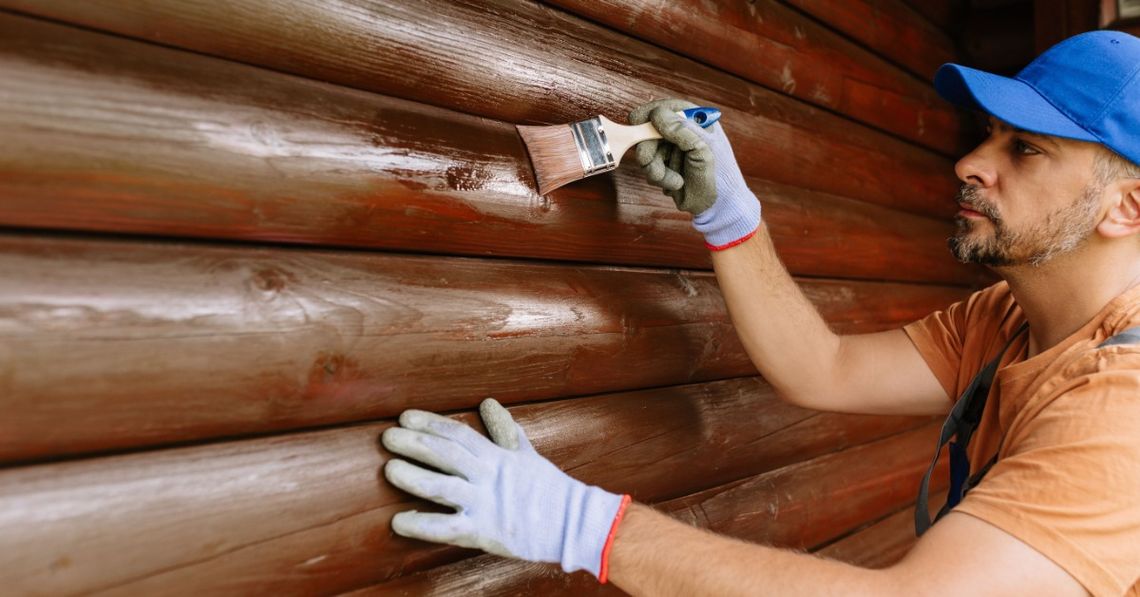
Want to add a pop of color to your log cabin? Before you head off to the paint store, wait! While paint works on homes with materials such as wood siding, it isn’t the right coating for exposed logs. Here’s why you shouldn’t paint the exterior of a log cabin.
Paint Traps Moisture Inside the Logs
Logs naturally absorb moisture when outdoor humidity rises and release it as the surrounding air dries. Exterior paint creates a film over the wood, which limits how freely that moisture can escape through the surface.
Water that remains inside the logs gives decay-causing fungi the damp environment they need to grow. The painted surface may still look intact while moisture sits underneath it. By the time the coating starts blistering or peeling, the wood behind it may already have suffered damage.
Trapped Moisture Encourages Wood Rot
Wood rot develops when fungi break down damp wood over time. If paint prevents moisture from leaving a log properly, the wood remains damp for longer periods and becomes more vulnerable to decay.
The coating also hides the early changes that would warn you something is wrong. You won’t see the grain darkening or the surface beginning to deteriorate as easily through an opaque layer. If the decay continues, sections of the log may soften beneath the paint and require repair or replacement.
Paint Can Start Peeling Away
Logs expand as they absorb moisture and contract as they dry. That movement happens throughout the year, even after a cabin has been standing for decades.
Paint forms a film across the surface, so it has to tolerate the movement happening underneath it. Over time, the coating can crack where the log changes shape. Those cracks allow edges of the paint to lift before larger sections begin peeling away. You’re then left scraping loose paint before you can apply another coating to the wall.
Cracked Paint Lets Water Reach the Wood
A crack in the paint gives rainwater an opening to reach the bare wood underneath. The surrounding coating then limits how readily that moisture can evaporate back through the surface.
Water may collect behind the paint and create blisters as the coating separates from the log. Covering those areas with another coat doesn’t remove the moisture already inside the wood. The log needs time to dry before you deal with the damaged finish, or you risk sealing moisture beneath another layer.
Paint Hides the Condition of the Logs
Exposed wood gives you a better view of what’s happening across the exterior of your cabin. You can see changes in the grain, developing cracks, or areas where moisture has altered the wood.
Paint covers those visual signs with an opaque layer. A log may begin deteriorating underneath while the painted surface still looks acceptable from several feet away. That makes routine inspections less informative because you’re examining the coating instead of the wood itself. Problems may progress further before you recognize that a section needs repair.
Removing Paint Takes a Lot of Work
Changing your mind after painting a log cabin creates a large refinishing job. Before another type of coating reaches the wood, you have to remove the existing paint.
Logs make that process harder because their surfaces aren’t perfectly flat. Paint settles into checks and follows variations in the grain. It can also collect in joints where one log meets another. Removing those layers takes careful work so you don’t damage the wood underneath. A finish that seemed convenient at first can leave you with far more preparation later.
Paint Covers the Natural Wood Grain
One of the defining features of a log cabin exterior is the visible grain running across each log. Paint hides that grain beneath an opaque coating and gives the wall a more uniform surface.
Even a brown or wood-toned paint won’t preserve the natural variation in the logs because the pigment sits over the wood rather than allowing the grain to remain visible. If you chose a log cabin partly for its natural appearance, covering the exterior changes one of the features that separates it from a conventionally sided home.
Repainting Creates More Exterior Maintenance
Exterior paint breaks down as sunlight and weather affect the coating. When that happens, repainting the cabin involves more preparation than simply applying another layer.
Loose paint has to come off before the next coat goes on. If you paint directly over peeling sections, the new coating is attached to paint that’s already separating from the log. Repeated repainting can leave several layers across the surface, which adds more removal work during future maintenance. Over the years, that cycle can turn exterior upkeep into a much larger job.
Paint Makes Log Repairs Harder to Blend In
Some log damage only affects one section of a wall, so a repair may involve replacing part of a log rather than rebuilding the surrounding area. Paint adds another complication when you’re trying to blend that repair into the existing exterior.
Fresh wood doesn’t have the same coating history as the older logs around it. Even when you apply the same paint color, differences beneath the coating can affect the finished appearance. Older painted areas may contain several previous layers, while the repaired section starts with bare wood.
Paint Doesn’t Accommodate Normal Log Movement
Logs continue changing slightly as their moisture content rises and falls. They swell as they absorb moisture and contract again as they dry.
A painted coating sits across the surface while that movement continues underneath it. Repeated expansion places stress on the paint film and contributes to cracking over time. Those cracks then create new openings where moisture can reach the wood. A coating made for log exteriors needs to work with those natural changes rather than forming a rigid layer across them.
Give Your Cabin Color Without Paint
As you’ve learned, painting the exterior of a log cabin can have disastrous consequences. But that doesn’t mean you have to give up on adding color. Staining is similar application-wise to paint and can give your cabin the color you want without covering the natural wood grain
Comment
Comments