
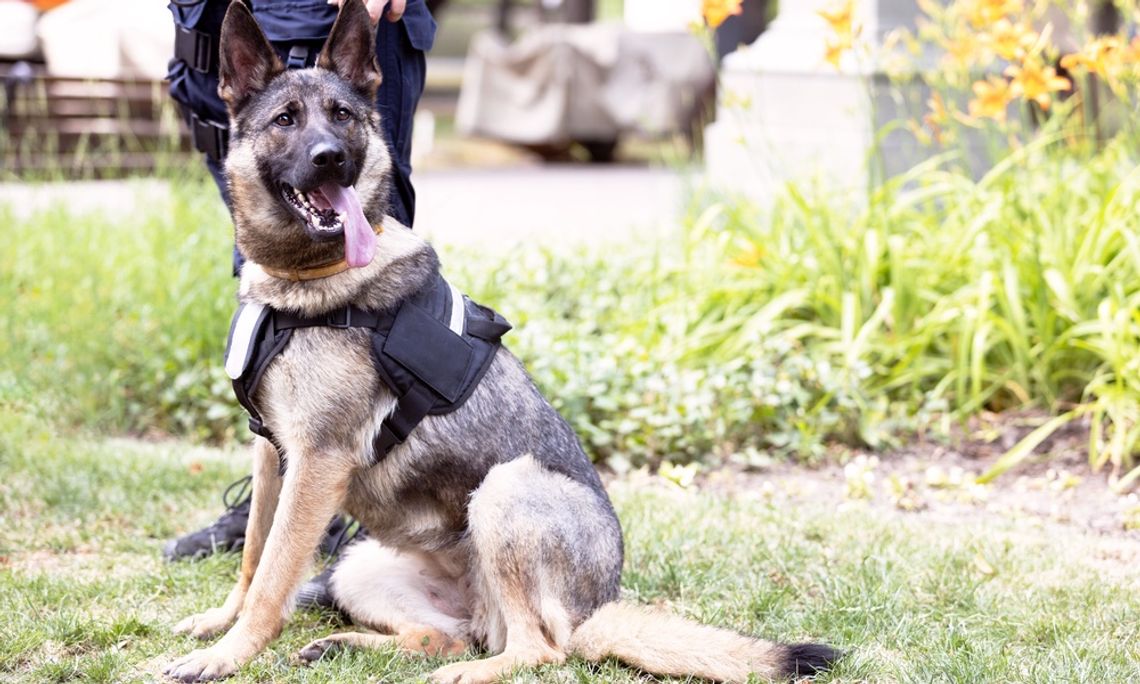
Ever wonder what kind of training K9 dogs go through? These dogs need to be able to follow a scent, respond to their handler, and stay focused under pressure! Here’s how K9 dogs trained for police work prepare for the jobs they may face beside law enforcement officers.
Trainers Start With the Right Dog
Police K9 candidates need strong focus, high toy or food drive, confidence in unfamiliar settings, and the willingness to keep working when a task gets difficult.
Trainers test those traits before advanced training begins. A dog that loses interest quickly, avoids new environments, or gives up when a reward is delayed may not be suited for police work.
Obedience Builds Handler Control
Before a dog begins specialty work, it needs to respond reliably to basic cues. Obedience training teaches the dog to follow the handler’s instructions even when another person or animal draws its focus.
Practice takes place in different locations so the dog doesn’t connect a command with only one training yard. The dog learns that the same cue still applies around traffic or unfamiliar people. That repetition prepares the dog to respond during more demanding police work.
Gear Becomes Part of Normal Work
During training, police K9s are outfitted with equipment they may also wear during field work. K9 tactical gear has evolved over the years, from basic work harnesses to protective equipment made for tougher assignments. These items protect the dog without restricting normal movement.
Wearing the equipment during practice gives the dog time to adjust to its weight against the body. By the time the gear appears during a police call, it’s already part of the dog’s normal work routine.
Scent Work Teaches Dogs to Follow Odor
Many police K9s learn to follow human scent across a distance. Trainers begin with short scent trails that lead to a reward, then increase the distance as the dog understands what it needs to follow.
Wind can move scent away from the exact path a person walked. The dog learns to stay with the odor even when the trail doesn’t form a straight route. Repeated practice strengthens that ability until the dog can keep working when the scent becomes harder to locate.
Detection Training Builds Odor Recognition
Detection dogs learn to recognize a target odor and respond when they find it. Trainers first pair that odor with a reward the dog already wants, such as a favorite toy.
As training continues, the dog has to find the odor before the reward appears. Trainers repeat that setup until the dog learns that locating the scent earns the toy. From there, the dog can search an area for the odor without seeing the reward first.
Search Training Builds Persistence
Police dogs may need to search an area for a person who is out of sight. During training, the handler, trainer, or another participant hides somewhere in the space so the dog has a person to locate.
The first hiding spots are easier to find. Later exercises place the person in harder locations, and the dog learns to keep searching after an empty room. The exercise ends when the dog finds the hidden participant or the handler gives another instruction.
Apprehension Training Teaches Controlled Contact
Some police K9s train to stop and hold a person after the handler gives a cue. During practice, a trainer or decoy wears a padded bite sleeve or suit so the dog has protected equipment to grip.
The dog learns where to make contact and how to maintain that hold until the handler gives the next instruction. Trainers repeat the exercise so the dog doesn’t bite simply because someone is running or moving nearby. The behavior has to begin with the handler’s cue.
Release Training Teaches the Dog to Stop
A K9 that knows how to engage also needs to know when the task has ended. Trainers practice a release cue repeatedly so the dog learns to disengage as soon as the handler gives the instruction.
This skill takes repetition because the dog is already highly engaged when the cue arrives. Trainers work until the dog can stop even when excitement remains high. The lesson gives the handler control over when physical contact ends instead of leaving that decision to the dog.
Noise Training Builds Recovery
Police K9s work around sounds that many pets rarely hear at close range. Trainers expose dogs to louder environments so a sudden noise doesn’t stop the task completely.
The dog doesn’t need to ignore every sound around it. Instead, it learns to recover after the noise and return to the handler’s instruction. Trainers begin at a level the dog can handle, then raise the difficulty over time.
Scenario Training Tests Learned Skills
Later in training, dogs practice individual skills in settings that resemble police calls. A scent exercise may move from the usual training area to a parking lot or another unfamiliar location.
The skill itself stays the same while the surroundings change. That gives trainers a better way to judge whether the dog understands the behavior or has simply memorized one routine. If performance drops in the new setting, trainers can return to that skill and work on it before the dog faces the same problem during field work.
Certification Checks Required Performance
Before regular police work begins, a K9 team may need to complete certification requirements set by the agency or another recognized organization. The test focuses on whether the dog performs its assigned work at the required level.
A detection dog is evaluated on detection tasks, while a patrol dog completes testing related to its own job. Certification gives the agency a formal record of the team’s performance before regular assignments begin. It also provides a benchmark trainers can use during later practice.
Practice Continues Throughout the Dog’s Career
Certification doesn’t end a police dog’s education. K9 teams continue regular practice throughout the dog’s working career so trained behaviors remain accurate.
Handlers revisit individual skills and correct problems as they appear. A dog that begins struggling with one type of search may spend extra time on that exact task before returning to regular duty. Continued practice also keeps the dog accustomed to responding to the handler rather than relying on habits developed from repeated field assignments.
From Training To Police Work
Police K9s spend months learning the skills they need before they work beside officers. Continued practice keeps those skills ready for the situations they may face throughout their careers.
Comment
Comments