
Moving products through a warehouse becomes increasingly complex as order volume rises and handling demands shift throughout the day. Employees must move goods between work areas and prepare orders without causing bottlenecks.
Automation gives facilities substantial control over those movements by assigning repetitive handling tasks to equipment designed for consistent operation. Warehouses that implement automated processes will be able to strengthen material handling in numerous ways.
Conveyors Maintain Consistent Product Flow
Conveyor systems move cartons, totes, cases, and other loads along designated routes inside a warehouse. Products travel between storage zones and shipping points without employees repeatedly carrying or transporting each item. Because the route remains fixed, warehouses gain predictable movement between processes.
Powered conveyors also regulate the pace of material flow. Sensors and controls detect product position along the line, then coordinate starts and stops based on downstream activity. Controlled movement reduces congestion near packing stations or sortation equipment because products enter those areas at a manageable rate.
Automated Storage Systems Reduce Travel
Employees spend considerable time walking through aisles when inventory stays in conventional shelving or pallet racks. Automated storage and retrieval systems change that process by bringing stored products toward a workstation. Cranes, shuttles, lifts, or robotic mechanisms retrieve inventory according to system commands.
Reducing travel between storage locations shortens the physical distance involved in each picking cycle. The warehouse can process additional inventory movements without requiring employees to cover the same routes repeatedly. Automated storage also provides controlled access to dense storage areas where manual retrieval would take additional time.
Sortation Systems Direct Products Accurately
Warehouses handling numerous destinations must separate products according to order, route, carrier, or processing requirement. Automated sortation systems identify an item and direct it toward the appropriate destination. Scanners, sensors, and mechanical diverters work together to complete each transfer.
Accurate sorting limits handling errors that occur when employees manually separate a large volume of similar packages. Products reach the next stage of the operation with fewer unnecessary transfers.
Robotic Picking Speeds Repetitive Handling
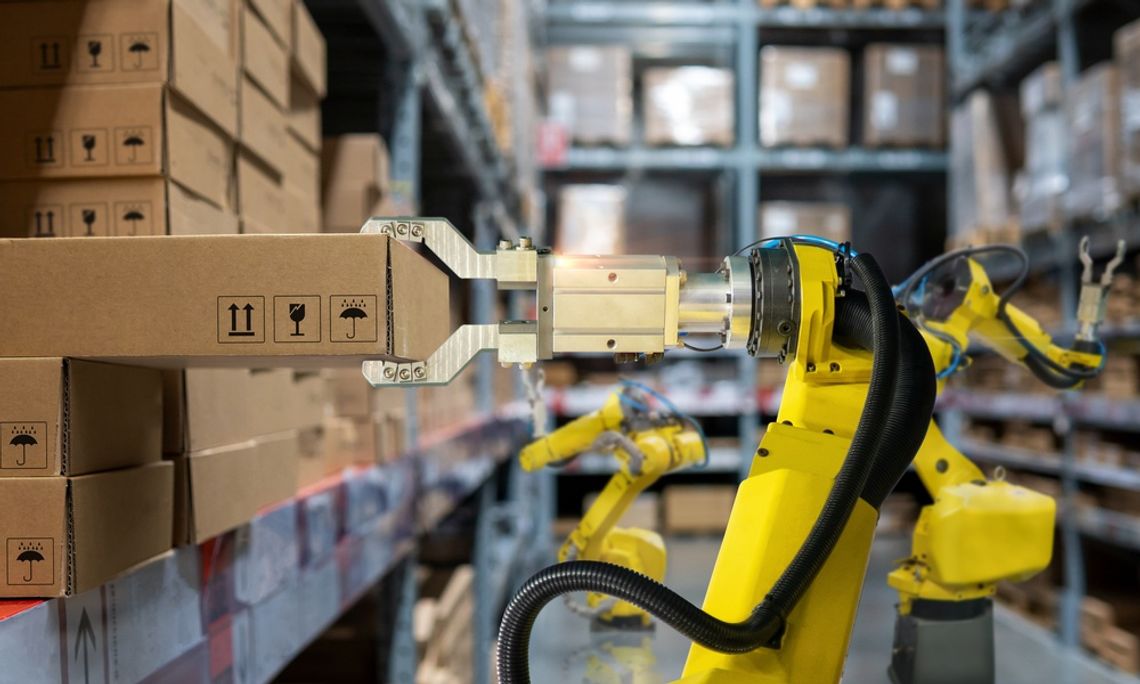
Picking frequently requires employees to repeat the same reach, lift, transfer, and placement motions throughout a shift. Robotic picking systems automate certain portions of that work by identifying products and moving them between containers or processing areas. Their usefulness depends on product size, shape, weight, and the consistency of the picking environment.
Robotic arms equipped with suitable grippers can perform repeatable movements with precise positioning. Pneumatic components frequently contribute to these automated motions when equipment requires controlled gripping or linear movement. Engineers considering installing round body cylinders for automated systems must account for factors such as stroke length, available space, operating pressure, and load requirements.
Automated Guided Vehicles Improve Transport Flexibility
Fixed conveyors work well when products regularly travel along the same route. Some facilities require a transport system that adapts to changing pickup points or destinations. Automated guided vehicles move materials through a warehouse without requiring a permanently installed conveyor path.
Many systems transport pallets, carts, bins, or racks between production and storage areas. Guidance technology determines where each vehicle travels, and fleet software coordinates traffic across shared routes. Warehouses can adjust transportation patterns when workflows change without rebuilding large sections of fixed material-handling equipment.
Autonomous Mobile Robots Optimize Picking Routes
Autonomous mobile robots use sensors and navigation software to travel through warehouse environments. Unlike equipment that follows a fixed guide path, these robots evaluate their surroundings and select appropriate routes. Their ability to navigate around obstacles makes them useful in facilities with shared working areas.
During order picking, a mobile robot might travel between inventory locations and transport completed picks toward packing. Employees reduce the time spent pushing carts across long aisles because the robot handles the transportation task. Reducing travel allows workers to focus their effort on verifying and handling products.
Palletizers Standardize Load Building
Building pallet loads requires repeated lifting and careful product placement. Automated palletizers arrange cases or other packaged goods according to a programmed stacking pattern. The equipment places each item in a controlled position so the finished pallet maintains a consistent configuration.
Stable load patterns improve subsequent handling because forklifts, conveyors, and wrapping equipment receive pallets with predictable dimensions. Consistent placement also reduces variation between loads prepared by separate operators or shifts. Facilities moving high case volumes can therefore maintain a steadier flow into storage or outbound shipping.
Barcode Scanning Strengthens Inventory Tracking
Physical automation works most effectively when warehouse systems know where products are located. Barcode scanners capture identifying information as inventory enters or moves through a facility. Each scan creates a record that warehouse software can use to update product status or location.
Automatic data capture reduces the number of manual entries employees must complete during material transfers. Accurate records allow downstream equipment and workers to act on current inventory information. When the digital record matches the physical product flow, picking and replenishment processes encounter fewer disruptions caused by misplaced inventory.
Automated Dimensioning Improves Load Planning
Packages with inconsistent dimensions complicate storage assignments and shipping preparation. Automated dimensioning systems measure the length, width, height, and sometimes weight of an item as it passes through a designated station. Warehouse software then uses those measurements to determine how the product fits within later handling processes.
Reliable dimensions are useful when selecting cartons, assigning storage space, or planning outbound loads. The warehouse receives consistent measurements without requiring an employee to stop and measure each package manually. Improved dimensional data gives automated equipment clear information for routing and allocating space.
Warehouse Software Coordinates Equipment Activity
Individual machines provide limited value when each system operates without information from the rest of the warehouse. Warehouse management and control software connect inventory data with material-handling activity. The software determines where goods must travel and sends instructions to compatible automated equipment.
Coordination becomes especially valuable when several processes happen at once. A system can release inventory from storage according to picking demand, direct conveyors toward available lanes, and assign transport equipment according to workload. The resulting sequence reduces unnecessary movement because each process responds to the current condition of the operation.
Automation Establishes a Controlled Workflow
Replacing every manual process isn’t the solution to warehouse efficiency. Strong automated material handling systems apply equipment where repetitive movement, high volume, or precise routing creates clear improvement opportunities.
Comment
Comments