
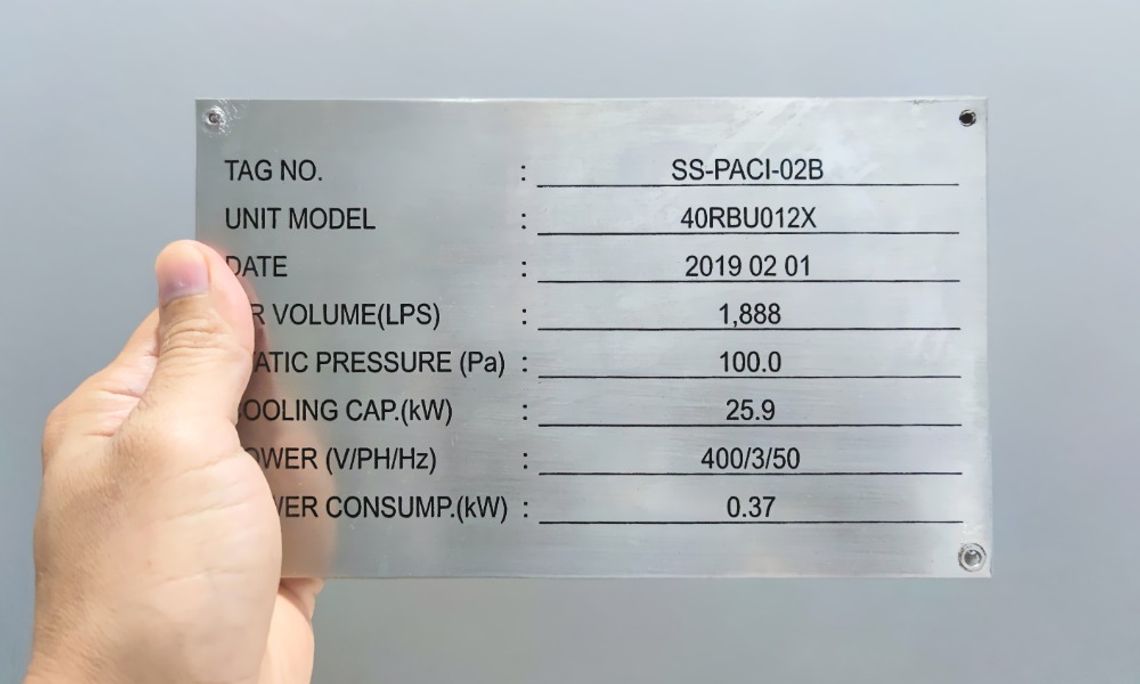
Equipment labels do more than identify machines. They convey operating details, safety information, serial numbers, maintenance instructions, and ownership data. When those labels fade, crack, peel, or corrode, workers lose access to the information they may need during daily operations.
That makes material selection a practical decision rather than a cosmetic one. The right equipment label material depends on the equipment, the surrounding environment, and the type of wear the label will encounter. Heat, moisture, chemicals, abrasion, and sunlight can all shorten a label’s useful life. Choosing a material that matches those conditions helps companies avoid frequent replacements and keeps important information readable longer.
Stainless Steel
Stainless steel works well in demanding industrial environments because it resists corrosion, moisture, heat, and physical wear. It also holds up well around chemicals that can damage weaker materials.
Manufacturers often use stainless steel for identification plates, warning labels, asset tags, and equipment data plates. The material performs especially well on machinery that stays outdoors or operates in wet areas.
Companies may choose to use stainless steel nameplates when equipment faces repeated exposure to harsh conditions. Stainless steel also suits applications where labels must remain attached for many years without bending or deteriorating.
The material costs more than many plastic or adhesive options, but its durability can reduce replacement frequency. That long service life often makes stainless steel a practical choice for critical equipment identification.
Aluminum
Aluminum offers durability without the extra weight of stainless steel. It resists rust naturally, making it useful in humid locations and outdoor settings.
Equipment manufacturers frequently use aluminum for serial plates, rating plates, control panels, and identification tags. Aluminum also accepts printed or engraved information well, which allows companies to create clear labels with detailed text.
Anodized aluminum offers even more protection. The anodizing process strengthens the surface and helps printed information resist fading and scratching. That makes anodized aluminum useful for equipment that experiences regular handling or exposure to the elements.
Aluminum may not offer the same chemical resistance as stainless steel, but it performs well in many industrial environments. It also provides a professional appearance without adding much weight to the machine.
Polyester
Polyester labels work well when companies need a durable adhesive label rather than a rigid metal plate. High-quality polyester resists moisture, oils, mild chemicals, and abrasion.
These labels can conform to flat or slightly curved surfaces, which makes them useful on control panels, electrical equipment, tools, and machinery housings. Polyester also supports detailed printing, barcodes, QR codes, and variable data.
Many polyester labels include a strong pressure-sensitive adhesive. That adhesive allows the label to stay in place without screws or rivets. Proper surface preparation plays an important role in adhesion, so installers should clean dirt, grease, and moisture before applying the label.
Polyester works best in environments where equipment faces moderate industrial wear but doesn’t require a thick metal plate.
Polycarbonate
Polycarbonate gives equipment labels a tough, impact-resistant surface. Manufacturers often use it for control panels, membrane switches, overlays, and operator interfaces.
This material can handle repeated touching and cleaning better than many paper or basic plastic labels. It also maintains good clarity, which makes it useful for labels that include windows, icons, or printed instructions.
Polycarbonate performs well indoors and in controlled industrial spaces. Prolonged UV exposure can affect some grades, so companies should choose UV-resistant versions for outdoor equipment.
The material also works well when workers need to interact with the labeled surface regularly. Its strength helps protect printed information from repeated contact.
Vinyl
Vinyl offers flexibility and strong resistance to moisture. It works well on curved, textured, or uneven equipment surfaces where rigid materials may not fit properly.
Manufacturers produce vinyl labels in many thicknesses and adhesive strengths. Some varieties work well outdoors, while others suit temporary or light-duty applications.
High-performance vinyl can resist sunlight, rain, and temperature changes for years. Lower-cost vinyl may fade or shrink sooner, so companies should match the grade to the expected service life.
Vinyl works especially well for equipment markings, safety labels, directional graphics, and identification decals. Its flexibility makes installation easier on irregular surfaces.
Brass
Brass brings both durability and a distinctive appearance. Companies often choose it for equipment where appearance carries more importance, such as custom machinery, control panels, instruments, or historical equipment.
The material accepts engraving well and develops a natural patina over time. Some companies prefer that aged appearance, while others apply protective coatings to help brass retain its original finish.
Brass can handle moderate wear, but it doesn’t match stainless steel in highly corrosive settings. Moisture and certain chemicals can affect the surface over time.
For indoor equipment or decorative identification plates, brass provides a durable option with a more traditional look.
Acrylic
Acrylic provides good clarity and a clean appearance, making it useful for equipment labels that emphasize visibility and presentation. Manufacturers often use acrylic for signs, panels, protective covers, and identification pieces.
The material resists many weather conditions and keeps printed graphics visible. It also handles UV exposure better than some other plastics.
Acrylic doesn’t offer the same impact resistance as polycarbonate, so it works best where heavy contact remains unlikely. It can crack under strong force.
For indoor equipment, display panels, or labels that need a polished finish, acrylic can provide an attractive and durable solution.
Match the Environment
Material selection should start with the conditions surrounding the equipment. A label on an indoor electrical cabinet faces different challenges than a nameplate on an outdoor pump.
Outdoor labels need strong UV and moisture resistance. Equipment near chemicals requires a material that can tolerate spills and cleaning agents. Machinery in production areas may need labels that resist abrasion from tools, gloves, or moving parts.
Temperature also affects performance. Extreme heat can weaken adhesives or distort some plastics. Cold environments can make certain materials brittle.
Companies should review each application rather than choosing one label material for every machine. Matching the material to the environment improves longevity and prevents unnecessary replacements.
Consider Attachment
The label material only solves part of the durability problem. The attachment method also affects how long the label stays in place.
Adhesive labels work well on smooth, clean surfaces. They allow fast installation and create a low-profile finish. However, grease, dust, moisture, or rough textures can weaken the bond.
Mechanical fasteners provide stronger attachment for rigid nameplates. Rivets and screws can hold metal labels in place even when equipment experiences vibration or outdoor exposure.
Some applications use both adhesive and mechanical fasteners. That combination adds stability and helps prevent movement.
Choosing the right attachment method protects the label from peeling, shifting, or falling off during normal equipment use.
Think About Readability
A durable label has little value if workers can’t read it. Material and marking method should work together.
Engraving offers long-lasting identification because the information remains cut into the material. Etching provides another durable option for metals. High-quality printing works well when manufacturers combine it with durable inks and protective finishes.
Contrast also affects readability. Dark text on a light surface or light text on a dark background helps workers locate information quickly.
Companies should also consider font size and layout. Clear spacing helps operators read important details without struggling to interpret crowded text.
Choose for the Long Term
Equipment labels face more stress than many people expect. Heat, moisture, chemicals, sunlight, and repeated handling can quickly damage weak materials.
The best equipment label material depends on where the equipment operates and how workers use it. When companies match the material to those conditions, labels stay readable longer and require fewer replacements. A thoughtful material choice protects important information and helps equipment identification remain dependable throughout the machine’s service life.
Comment
Comments