
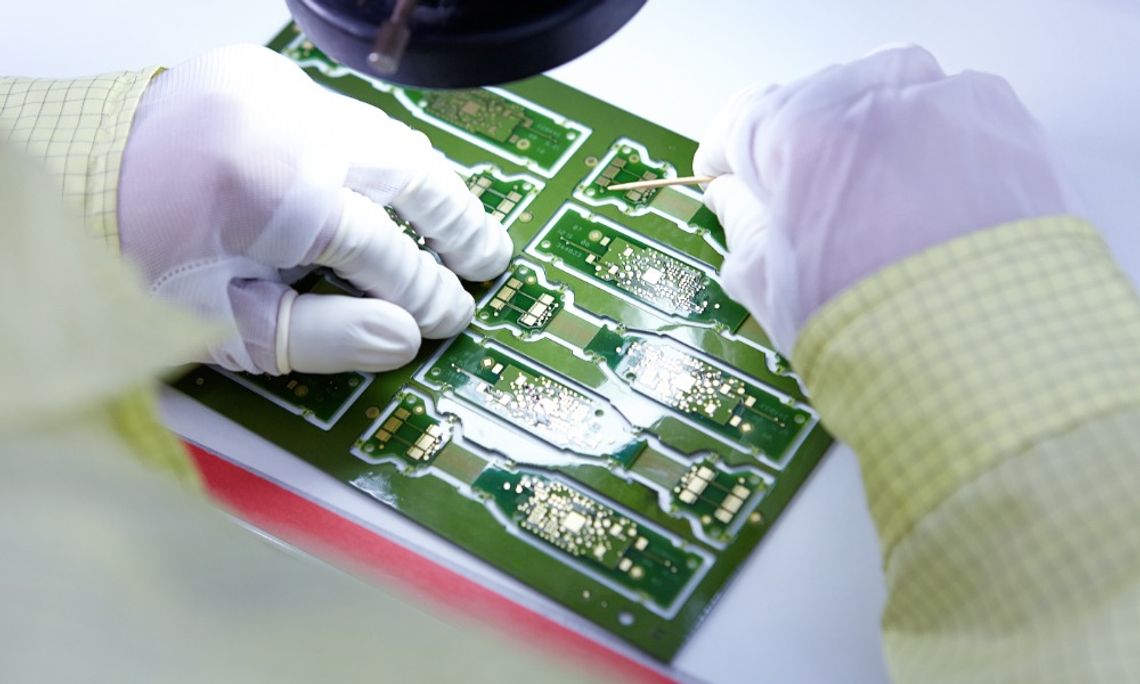
Electronics no longer must remain flat, rigid, or stuck inside bulky housings. Flexible circuits now appear in compact devices, sensors, automotive systems, medical technology, and an expanding range of consumer products. As engineers find new ways to place electronics in tight or moving spaces, the materials inside those systems become increasingly important.
Metal foil is one of those materials. It can carry electrical current, provide shielding, support mechanical functions, or become part of a precisely manufactured component. Yet no single foil works equally well for every application.
Choosing metal foils for flexible electronics requires more than comparing conductivity values. Designers also must consider how a material bends, how thin manufacturers can produce it, how it reacts to repeated movement, and whether it works with the fabrication process.
Start With the Function of the Foil
Before comparing alloys, identify what the metal must do inside the device.
Some foils form conductive traces that carry electrical signals or power. Others provide electromagnetic shielding, create contacts, reinforce certain areas, or serve as precision components within a larger assembly.
Those functions place different demands on the material. A conductor may require very high electrical conductivity. A stamped contact may need greater strength and spring behavior. A shielding layer may need sufficient conductivity while also meeting strict thickness requirements.
Compare Electrical Conductivity
Conductivity remains one of the most important considerations in electronic design.
Copper has become a standard material for many flexible circuits because it combines excellent electrical conductivity with useful ductility. It can carry current efficiently while remaining thin enough for compact assemblies.
Other metals and alloys may sacrifice some conductivity in exchange for different mechanical properties. Brass, for example, contains copper and zinc. Its conductivity falls below that of pure copper, but its mechanical behavior can make it useful in applications where electrical performance represents only part of the design challenge.
Consider How the Material Will Bend
When choosing metal foils for flexible electronics, designers must consider how much the material will bend. A flexible electronic device might bend once during installation or flex thousands of times during use. Those scenarios require different material properties.
A foil that performs well in a mostly stationary assembly may not suit a component that moves frequently. Bending places stress on the metal, particularly around tight radii. Frequent cycles can eventually produce fatigue and cracking.
Designers should consider the direction of bending, the radius of each bend, and the frequency of movement. Material temper also matters because harder and softer versions of the same alloy can react differently under mechanical stress.
Pay Close Attention to Foil Thickness
Thickness influences electrical performance, flexibility, weight, and manufacturing.
A thinner foil can bend more easily and occupy less space. Those advantages matter when designers must fit circuitry into a compact package. Thinner material, however, also carries less current than a thicker conductor of the same material and width.
Extremely thin foil can introduce manufacturing challenges as well. Handling becomes more delicate, dimensional tolerances become more significant, and fabrication methods must suit the material.
Look Beyond Copper When the Application Demands It
Copper deserves its prominent place in flexible electronics, but unique applications can benefit from other materials.
Brass foils for flexible circuit substrates offer one example. Because alloying copper with zinc changes the material's characteristics, brass can provide a useful combination of formability, strength, and corrosion resistance.
Aluminum may also enter the discussion in applications where low weight matters. Stainless steel can serve special mechanical, structural, or corrosion-resistant functions, although its electrical conductivity differs significantly from copper.
Evaluate Corrosion Resistance
Flexible electronics can operate in demanding environments. Moisture, chemicals, temperature changes, and exposure to contaminants may affect metal surfaces over time.
Corrosion can interfere with electrical connections or weaken small metal features. Designers therefore must consider the environment in which the product will operate.
Protective coatings, encapsulation, and careful material selection can reduce these risks. Even for circuits in enclosures, designers should consider what might happen during manufacturing, storage, installation, and normal use.
Match the Foil to the Manufacturing Process
Material selection and manufacturing should work together.
Flexible electronic components may undergo chemical etching, precision stamping, laser cutting, lamination, plating, or other processes. Each method places its own demands on the metal.
Chemical etching, for instance, can create highly detailed features without applying the mechanical forces of conventional cutting. Precision stamping can produce large quantities of small components efficiently, but the foil must tolerate the forming and handling involved.
Think About Heat and Thermal Performance
Electrical devices generate heat, and flexible electronics have little space to manage it.
Metals can help move heat away from sensitive areas. Copper combines strong electrical conductivity with high thermal conductivity, which contributes to its usefulness in electronic applications.
Yet, designers must consider thermal performance as part of the complete assembly. Adhesives, polymer films, protective layers, and surrounding components can affect how heat travels through a flexible circuit.
Account for Space and Weight
Flexible electronics frequently appear in products where every fraction of an inch matters.
Wearable devices, compact sensors, portable electronics, and embedded systems can leave little room for excess material. Thin foil can help designers reduce profile and weight while fitting conductive features into confined areas.
However, making every layer as thin as possible does not automatically improve a product. A thinner conductor may increase electrical resistance, while a thinner mechanical component may lack the durability necessary for its use.
Review Material Temper and Mechanical Properties
Alloy name alone does not tell the entire story.
Metal temper describes how processing has affected properties such as hardness, strength, and ductility. Two pieces of the same alloy can behave differently if they have different tempers.
A softer temper may support forming or bending, while a harder condition may provide greater stiffness or dimensional stability. The appropriate choice depends on what the foil must experience during both manufacturing and service.
Test Materials Under Realistic Conditions
Material specifications provide an essential starting point, but practical testing adds another layer of confidence.
Prototype assemblies can reveal problems that individual material data may not predict. Frequent bending tests can expose fatigue concerns. Environmental testing can show how heat or moisture affects performance. Manufacturing trials can identify handling difficulties before production volume increases.
Testing should reflect the conditions the device will actually face. A circuit that bends repeatedly needs a different evaluation than one that flexes only during installation.
Make the Selection as a Complete System
The best foil choice rarely comes from evaluating one property in isolation.
Conductivity matters, but so do thickness and flexibility. Mechanical strength may help one component while making another too stiff. Corrosion resistance can become critical in harsh environments, while manufacturability can determine whether an otherwise promising design works at production scale.
Flexible electronics demonstrate how much engineering can depend on seemingly simple materials. A sheet of metal only a fraction of an inch thick can influence electrical performance, durability, size, and manufacturing reliability.
By comparing those demands as parts of one system, designers can select a foil that supports the entire application rather than solving one problem while creating another.
Comment
Comments