
A skid steer, excavator, or compact tractor puts considerable weight on a trailer, and getting that machinery to the jobsite involves more than driving it up the ramps. Worn decking, damaged tires, or improperly positioned cargo could turn an ordinary hauling trip into an expensive problem.
Before pulling onto the road, take a few minutes to inspect the equipment, trailer, and components responsible for keeping the load secure. Checking before hauling heavy equipment gives you a chance to address problems with the vehicle parked.
Verify the Trailer’s Weight Capacity
A trailer that handles a compact tractor without trouble won’t necessarily accommodate a large excavator. Check the trailer’s gross vehicle weight rating (GVWR), which represents the maximum permitted weight of the loaded trailer. Subtract the trailer’s empty weight to determine its available payload capacity, accounting for any additional cargo or accessories.
Next, compare that capacity with the machinery’s actual operating weight. An excavator’s listed weight might exclude its bucket or hydraulic attachments, so consult the manufacturer’s specifications for the configuration being transported. Check axle ratings and the tow vehicle’s towing limits, too. The entire towing combination must remain within its applicable weight ratings.
Inspect the Trailer Deck for Damage
Heavy machinery concentrates tremendous pressure beneath its tracks or tires, making the condition of the trailer floor a serious concern. Walk across the decking and examine individual boards for rot, deep cracks, missing sections, or excessive movement. Pay close attention to areas near loading ramps, where equipment repeatedly transitions onto the trailer.
Examine the Fasteners and Cross Members
Loose screws, raised fastener heads, and visible corrosion deserve investigation before loading machinery. Inspect the metal cross members beneath the flooring for cracks, extensive rust, or damaged attachment points. Even sound decking won’t perform properly if the underlying structure has deteriorated.
When substantial damage calls for replacement, installing Apitong shiplap trailer flooring is ideal for demanding trailer applications. The overlapping board profile forms a closely fitted surface, giving the trailer a sturdy foundation.
Evaluate the Tires and Wheel Assemblies
Trailer tires carry substantial loads, and a failure on the highway could damage the equipment being transported. Check each tire’s inflation pressure against the manufacturer’s specifications, using the appropriate cold inflation pressure for its rated load. Look for sidewall cracking, exposed cords, bulges, and uneven tread wear.
Inspect the wheels for bent rims, missing lug nuts, or visible damage around the mounting holes. Grease leaking from a wheel hub could indicate a seal problem, whereas unusual wheel movement might point to worn bearings. Address suspicious conditions before departure.
Test the Trailer’s Braking System
Stopping a trailer carrying several tons of machinery takes properly functioning brakes. Inspect accessible brake wiring, hydraulic lines, and electrical connections for obvious damage. With electric trailer brakes, verify that the brake controller communicates with the trailer and responds according to the manufacturer’s testing procedure.
Don’t overlook the breakaway system, either. Inspect its battery, switch, cable, and attachment to the tow vehicle. Test the system according to the manufacturer’s directions, then restore it to its normal operating condition. A defective breakaway system could leave an uncoupled trailer without the emergency braking function it was designed to provide.
Check the Hitch and Safety Chains
A trailer’s connection to the tow vehicle handles substantial forces during acceleration, braking, and turning. Inspect the hitch components for cracks, excessive wear, deformation, or loose mounting hardware. Confirm that the trailer coupler or fifth-wheel connection has fully engaged and that the locking mechanism operates correctly.
For applicable bumper-pull trailers, verify that the safety chains have sufficient capacity and attach to designated points on the tow vehicle. They must provide adequate clearance for turning without dragging along the pavement. Check the tongue weight and hitch ratings, since an improperly loaded trailer could produce unstable towing behavior even when the coupling itself remains secure.
Inspect the Loading Ramps and Hinges
Loading ramps must withstand concentrated machinery weight as equipment enters and exits the trailer. Inspect the ramp surfaces for cracks, bent sections, damaged traction bars, or loose welds. Compare the equipment’s weight with the ramp system’s rated capacity, accounting for the distribution of weight across individual ramps.
Next, examine the hinge pins, mounting brackets, and locking hardware. Ramps that shift unexpectedly create serious hazards during loading. Position the trailer on firm, level ground, secure the ramps according to the manufacturer’s instructions, and confirm that their spacing matches the machinery’s wheel or track width.
Review the Chains and Tie-Down Points
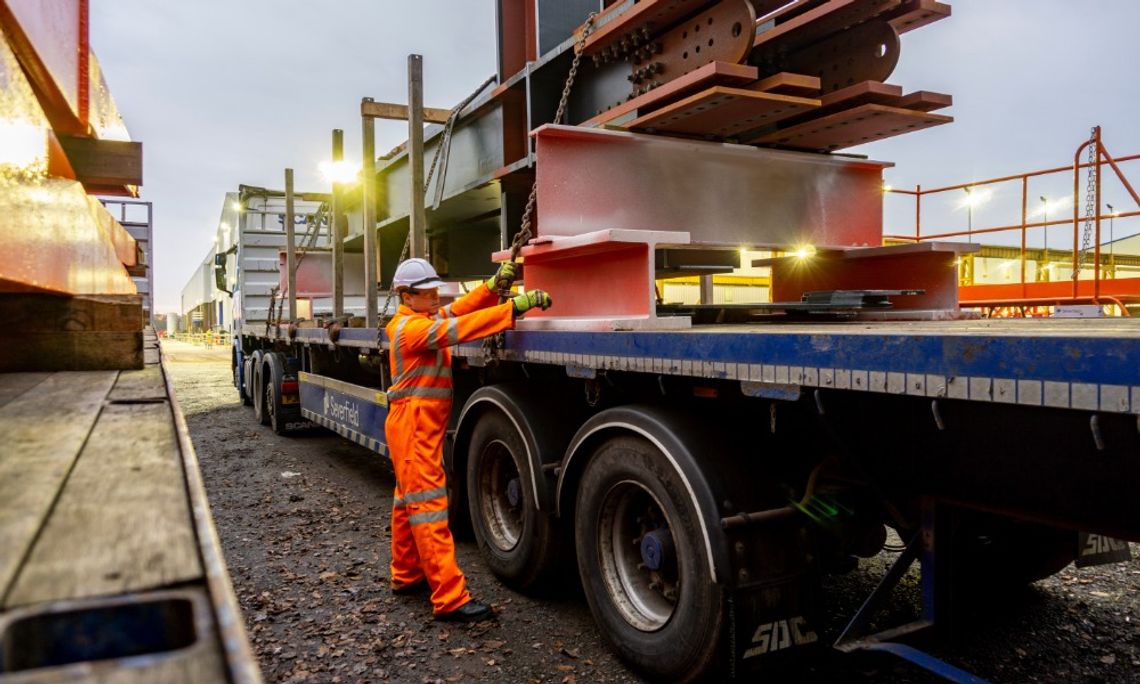
Chains and binders prevent equipment from shifting when the trailer encounters potholes, sharp turns, or sudden braking. Inspect every chain link for stretching, cracks, severe corrosion, or deformation. Check binders, hooks, and attachment hardware for defects that could compromise the securement assembly.
Verify the Working Load Limits
Each securement component has a working load limit (WLL), representing the maximum load it is rated to handle during normal service. Under applicable federal commercial cargo securement rules, the aggregate WLL must equal at least half the cargo’s weight, calculated according to the tie-down arrangement.
Federal rules generally require at least four tie-downs for wheeled or tracked heavy equipment weighing 10,000 pounds or above. Verify the requirements that apply to the load, including attachment locations and additional securement for accessories. Use designated equipment attachment points and inspect the trailer’s anchor points for damage before tightening the chains.
Check the Equipment’s Position and Attachments
Once the machinery reaches the trailer deck, examine its position before attaching the securement chains. The equipment’s weight distribution affects axle loading and the force placed on the tow vehicle’s hitch. Follow the trailer and equipment manufacturers’ loading guidance, accounting for the machinery’s center of gravity and the trailer’s axle configuration.
Secure Moving Equipment Components
Lower buckets, blades, and hydraulic attachments completely, then secure them against movement according to applicable regulations and manufacturer instructions. Lock articulated machinery against unintended movement, and engage the appropriate parking brake or transport controls.
Inspect the equipment for loose tools, removable accessories, or unsecured items that could fall during transport. Hydraulic leaks, dangling hoses, and damaged attachment pins deserve attention before the machinery leaves the loading area.
Confirm the Lights and Trailer Connections
A loaded trailer must communicate braking and turning intentions to surrounding traffic. Connect the trailer’s electrical plug, then verify that the brake lights, turn signals, tail lamps, and required marker lights function correctly. Inspect damaged lenses, loose wiring, and corroded connectors that could interrupt operation.
Check that the trailer’s reflectors remain visible and that the license plate is properly mounted. Secure electrical cables away from moving components and potential pinch points. If a light operates intermittently, investigate the connection before departure rather than assuming it will work throughout the trip.
Prepare for Successful Future Trips
Preparing to haul heavy equipment takes careful attention to the machinery and the trailer carrying it. Addressing a questionable component before departure is far preferable to dealing with a breakdown beside the highway. Once the trailer and equipment pass inspection, the trip can proceed with the load properly secured and the towing combination ready for the road.
Comment
Comments